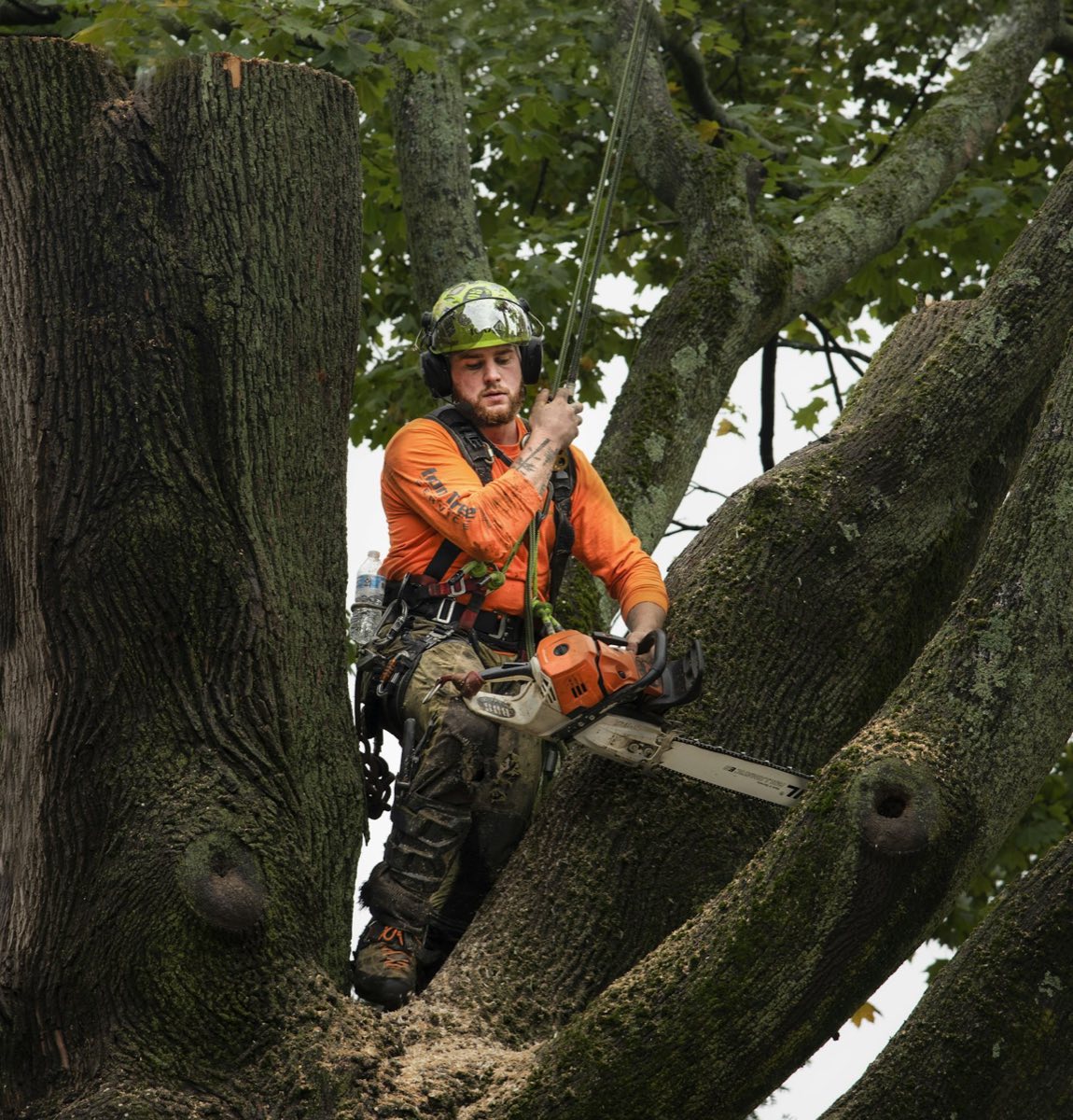
Straight felling or sectional dismantling?
Straight felling means cutting a tree at the base and dropping it in one piece. It's quick and cheap, but it needs a clear landing zone at least as long as the tree is tall, so it's mostly used in fields, large gardens and woodland.
Sectional dismantling is how most garden trees are removed. A climber or a platform works down the tree, cutting it into manageable pieces and lowering heavy sections on ropes (rigging) so nothing hits roofs, fences, greenhouses or power lines. It takes longer and costs more, but it's the only safe option in a tight space.
What affects the price
- Height, spread and species. Large hardwoods such as oak and beech take longer than conifers.
- Access. Can a chipper reach the tree, or does everything have to be carried through the house?
- What's underneath: buildings, glass, cables or a road that needs traffic management.
- Whether you want the stump ground out and the logs and chip taken away or left on site.
Check before anything is cut
If the tree has a Tree Preservation Order or stands in a conservation area, you need council consent or must give six weeks' notice first. See our TPO and conservation area guide. It's an offence to damage or destroy a wild bird's nest while it's in use or being built. Birds mostly nest from March to August but can nest at other times, so a good firm checks before cutting at any time of year. Bats and their roosts are protected all year round, even when no bats are present, so older trees with holes, splits or thick ivy should be checked by someone competent before felling.
Felling a large amount of timber, more than 5 cubic metres in a calendar quarter, can also need a felling licence from the Forestry Commission. Garden trees are usually exempt, but your tree surgeon should know whether it applies.