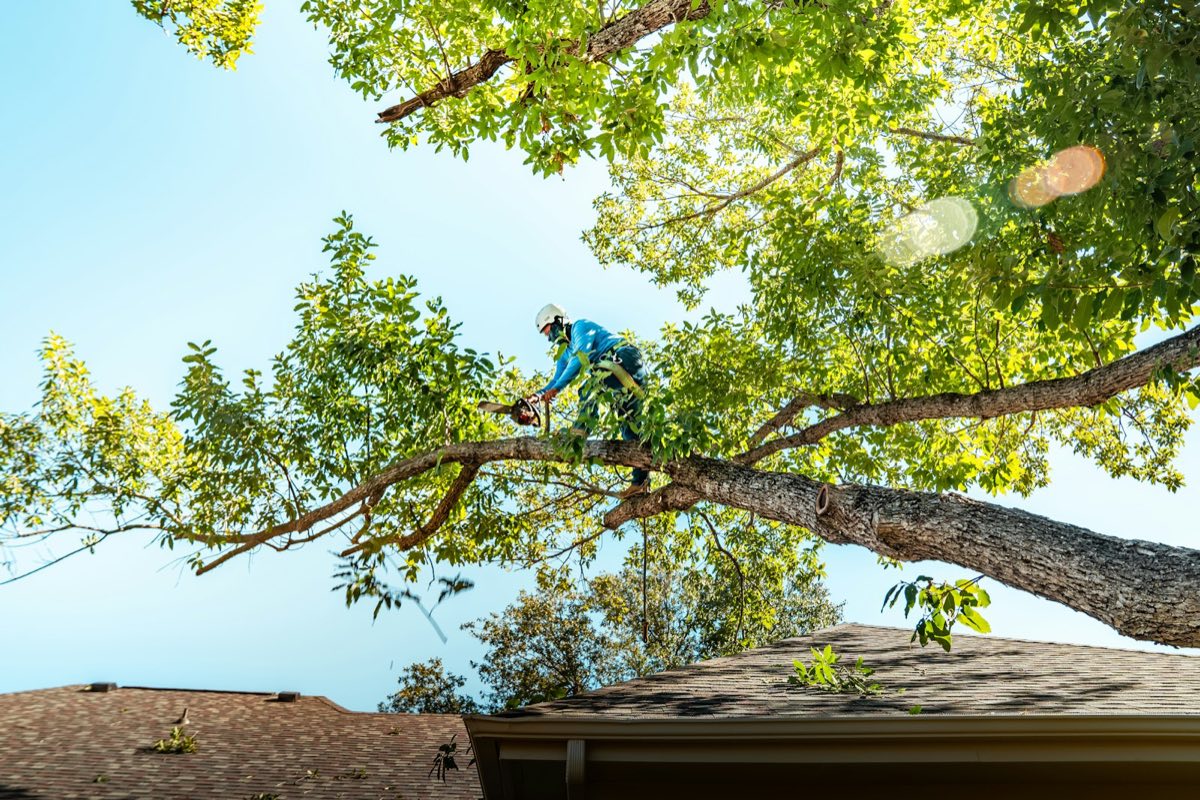
Types of pruning
- Crown thinning
- Removing selected branches from inside the canopy to let in more light and reduce wind resistance, without changing the tree's overall size or shape.
- Crown lifting
- Removing lower branches to give clearance over a road, path, driveway or lawn, or to let light under the tree. In Worcestershire, the county council asks for at least 2.3m of headroom over pavements and 6m over roads.
- Crown reduction
- Reducing the overall height and spread. See our crown reduction page.
- Deadwooding
- Taking out dead, dying, diseased or broken branches before they fall. This is common on ash trees affected by ash dieback.
- Pollarding
- Cutting back hard to the main framework of the tree, then repeating every few years. It suits limes, planes and willows, but a tree that has been pollarded needs to stay on a regular cycle.
- Formative and fruit tree pruning
- Shaping young trees so they grow a strong structure, and pruning apple, pear and plum trees for health and cropping. Old apple and pear trees can often be brought back with renovation pruning over two or three winters. Plums and cherries are pruned in spring or summer instead. Pruning fruit trees in line with good horticultural practice doesn't need consent even if the tree is protected.
Timing
Most pruning is done from late autumn to late winter. Plums and cherries are pruned in spring or summer to reduce the risk of silver leaf disease. It's an offence to damage or destroy a wild bird's nest while it's in use, and birds can nest at any time of year (mostly March to August), so a good firm checks before cutting.